March 2026
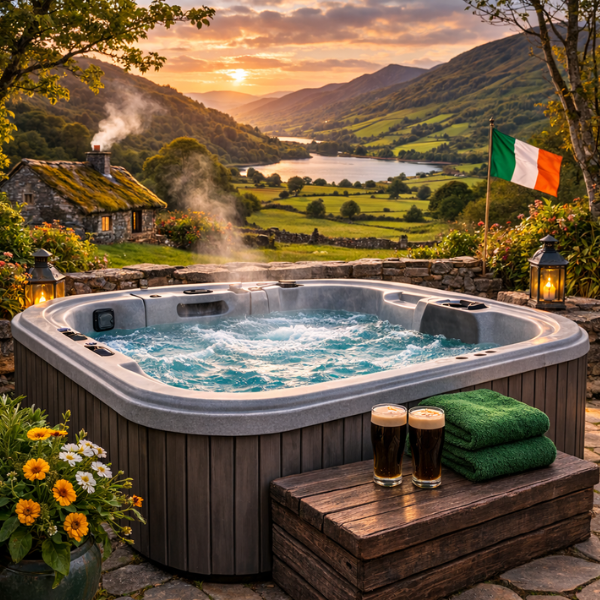
For centuries, people have gathered around natural mineral springs throughout Europe for relaxation and healing. One famous example is Lisdoonvarna Spa in western Ireland, where mineral-rich waters have attracted visitors since the 18th century. People traveled there believing the warm water could soothe aches, improve circulation, and help restore overall wellness.
Sound familiar?
Today, hot tub owners enjoy many of those same benefits right at home. Warm water, gentle hydrotherapy, and time spent relaxing with friends and family create the same kind of experience people have sought for generations.
So while you may not have a natural Irish spring in your backyard, your hot tub might be the next best thing.
This St. Patrick’s Day, pour a favorite drink, slip into the warm water, and enjoy a little luck of your own.
Water Care Workshops continue this month, helping spa owners feel confident about keeping their water clean, balanced, and easy to manage. We’ll cover testing, treatment basics, and simple habits that make a big difference. Whether you’re new to hot tubs or a longtime owner, these sessions will help you get more enjoyment out of every soak.
Classes are held at our showroom in Anaheim.
Testing regularly helps ensure that pH, sanitizer, and alkalinity levels stay properly balanced. When water chemistry is maintained consistently, it prevents common problems like cloudy water, skin irritation, and unnecessary wear on your spa equipment.
If you’re unsure whether your water is balanced, bring a sample into the store and our team will be happy to test it and help you get everything dialed in.
Many hot tubs are equipped with an ozone system, also known as an ozonator. This small device plays an important role in keeping your spa water clean while helping reduce the amount of chlorine or sanitizer needed.
Ozone systems work by producing O₃, a highly active form of oxygen, which is injected into the spa’s plumbing as water circulates. As ozone mixes with the water, it helps break down contaminants like body oils, lotions, bacteria, and other organic waste introduced during soaking. By helping oxidize these contaminants, ozone allows your sanitizer to work more efficiently and can reduce the overall amount of chlorine needed to maintain clean water.
What many spa owners don’t realize is that ozone generators don’t last forever. Over time, the ozone cell slowly stops producing ozone, even though the spa itself continues to run normally. In many cases, owners only notice the change when they find themselves needing to add sanitizer more frequently or struggling to maintain clear water.
Most ozone systems typically last around 3–5 years, depending on usage and operating conditions. If your spa is older and the ozonator has never been replaced, it may no longer be providing the benefits it once did.
Not sure if your spa has an ozone sanitizing system, or whether yours is still working properly? Give us a call or stop by the store and our team will be happy to help. If your spa does not currently have an ozonator and you’re interested in adding one, we can also help determine whether your spa is compatible.
Over the years, we’ve heard just about every question imaginable from children visiting the showroom with their parents. Kids are naturally curious, and when they see a hot tub bubbling away, their imaginations tend to run wild.
Here are some of the funniest and most common questions we’ve heard — along with a few honest answers.
This is easily the #1 question kids ask. Unfortunately, the answer is no. Bubble bath and soap products can leave residue in the plumbing and filters that is very difficult to remove. It can also cause excessive foam and potentially damage spa equipment. If soap does accidentally make its way into the spa, the best solution is usually to drain and refill the waterand rinse the filters.
Possibly — but only with a few considerations. Some dogs love water while others absolutely hate it. More importantly, pet hair can quickly clog filters and affect water quality. If a pet does take a dip, it’s a good idea to rinse the filters afterward and keep the water temperature lower for their comfort. And of course… always make sure your dog actually wants to be there.
While a hot tub can feel relaxing and refreshing, it doesn’t replace a proper shower. Oils, dirt, and lotions from your body still remain in the water. In fact, it’s actually better to shower before entering the spa to help keep the water cleaner.
You’ve probably heard this rule before. In reality, there’s very little scientific evidence supporting it. Most people can safely enjoy a soak after eating a light meal. However, heavy meals and hot water together can sometimes make people feel uncomfortable, so moderation is always a good idea.
This question always gets a few laughs, but the answer is definitely no. Even though spas use sanitizers, they are not designed to handle that kind of contamination. If an accident happens, the water chemistry will need to be adjusted and the sanitizer level increased to keep the water safe.
Most hot tubs are designed with a maximum temperature of 104°F. That’s plenty warm for relaxation. Children should generally soak at lower temperatures (around 98–100°F) and for shorter periods of time to avoid overheating.
Technically you could, but hot tubs are designed for relaxation — not underwater exploration. If kids want to bring toys into the spa, that’s perfectly fine as long as they are safe, clean, and don’t interfere with the filters or equipment.
Hot tubs are not deep enough for jumping or diving. Entering slowly and carefully is always the safest approach.
Definitely not. The warm temperatures and water chemistry that make a hot tub comfortable for people would not be safe for fish.
We’ve heard this one before too. While hot tubs can’t send you back in time, they are very good at helping you slow down and enjoy the moment — which might be the next best thing.
Children ask some of the most entertaining questions about hot tubs, and we always enjoy hearing them. If your kids have ever asked a funny hot tub question, we’d love to hear it!
Hot tub design continues to evolve, and one of the latest updates we’re excited about is the newly redesigned Freeflow Spas lineup. Known for their plug-and-play simplicity and energy-efficient operation, Freeflow Spas have long been a popular choice for homeowners looking for a straightforward way to enjoy hydrotherapy.
The latest redesign brings a refreshed look and several thoughtful improvements. The updated cabinets feature a more modern appearance that blends nicely into today’s backyard spaces, while maintaining the durable construction Freeflow owners have come to expect.
Inside the spa, seating has been refined for improved comfort and relaxation. Ergonomic contours help support the body in a more natural position while the jets deliver soothing hydrotherapy where it’s needed most. These improvements help create a more enjoyable soaking experience without adding unnecessary complexity.
Freeflow Spas continue to offer the convenience of plug-and-play operation, meaning many models can run on a standard 110-volt outlet. This makes installation simple and flexible for many homeowners, while still delivering the benefits of warm water relaxation and hydrotherapy.
Whether you’re familiar with Freeflow Spas or just learning about them, the refreshed lineup shows how spa design continues to improve year after year. If you happen to be in the showroom, feel free to take a look at the updated models and see what’s new.
Many hot tub owners think of soaking as a way to relax after a long day, but hydrotherapy can also play an important role in improving sleep and helping you start the day feeling energized.
One of the reasons a hot tub soak before bed can help you fall asleep faster has to do with how your body regulates temperature. When you soak in warm water, your body temperature rises slightly. After you step out of the spa, your body begins to cool down — a natural signal that helps prepare your body for sleep.
The warm water also helps relax muscles and relieve tension that builds up throughout the day. This relaxation can ease physical discomfort and help quiet the mind, making it easier to drift off and stay asleep.
Hydrotherapy may also help improve circulation. As blood vessels dilate in warm water, blood flow increases, delivering oxygen and nutrients throughout the body. This improved circulation promotes relaxation and helps the body transition into a restful state.
Many people also experience a calming mental effect when soaking. The warm water and buoyancy reduce pressure on the body while encouraging the release of feel-good chemicals that support relaxation and emotional balance.
For the best nighttime results, try soaking 15–20 minutes about an hour before bedtime. For a morning boost, a 10–15 minute soak can help wake up your body and mind.
Staying hydrated and keeping water temperatures in the comfortable range of 100–104°F will help ensure a safe and enjoyable experience.
When used regularly, hot tubs can support both better sleep and more energized mornings — offering the simple luxury of relaxation at night and a refreshing start to the day.
1000 N. Tustin Ave.
Anaheim, CA 92807
Get Directions
Mon-Sat 10am-7pm
Sunday 12pm-5pm
10700 Spencer St.
Fountain Valley, CA 92708
Get Direction Link Coming Soon
Mon-Sat 10am-6pm
Sunday 12pm-5pm
(714) 693-3404 Ext. 2
(714) 693-3404 Ext. 3
Privacy Policy
Terms & Conditions