
What’s the Best Temperature for Your Hot Tub?
One of the most common questions spa owners ask is:
“What temperature should I keep my hot tub at?”
The answer depends on several factors including comfort preference, time of year, intended use, and even energy efficiency. While there’s no one perfect setting for everyone, there are some general guidelines that can help you get the most enjoyment — and efficiency — from your hot tub.
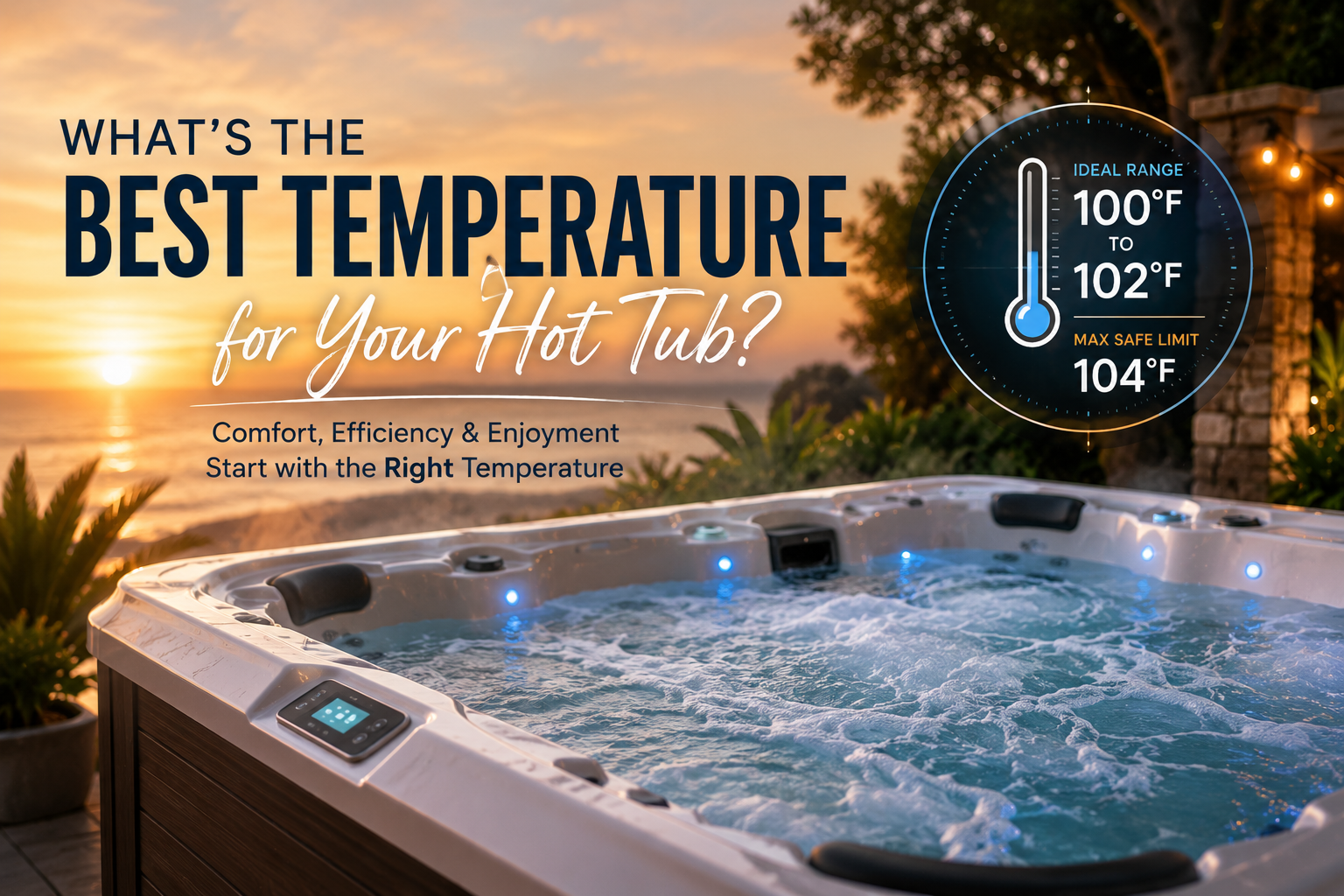
The Most Common Hot Tub Temperature
For many spa owners, 100°F to 102°F tends to be the sweet spot.
This range is:
- Warm and relaxing
- Comfortable for longer soaks
- Great for hydrotherapy
- Comfortable year-round for many people
Some people prefer slightly cooler temperatures in summer and slightly warmer during winter months.
The Maximum Recommended Temperature
Most hot tubs are designed with a maximum temperature setting of 104°F, which is generally considered the upper safe limit for healthy adults.
However, hotter is not always better.
At 104°F:
- Soak times should typically be shorter
- Hydration becomes more important
- Some people may feel overheated quickly
Children, older adults, pregnant women, and individuals with certain medical conditions should consult their physician regarding safe soaking temperatures.
Cooler Temperatures Can Be Great Too
Not everyone wants their spa extremely hot.
Many owners enjoy:
- 98°F–99°F during warm summer evenings
- Lower temperatures after exercise
- Cooler settings for family gatherings or longer social soaks
A slightly cooler spa can still provide relaxation while feeling more refreshing in warmer weather.
Cooler Temperatures Can Be Great Too
Not everyone wants their spa extremely hot.
Many owners enjoy:
- 98°F–99°F during warm summer evenings
- Lower temperatures after exercise
- Cooler settings for family gatherings or longer social soaks
A slightly cooler spa can still provide relaxation while feeling more refreshing in warmer weather.

Should You Turn the Temperature Up and Down Frequently?
In most cases… no.
Many people believe lowering the temperature when not using the spa saves energy. Surprisingly, constantly adjusting your spa temperature can actually work against efficiency.
Why?When you dramatically lower the temperature:
- The water cools down
- The spa cabinet and components cool down
- The heater then has to work harder and longer to reheat everything
That reheating cycle often consumes more energy than simply maintaining a steady temperature.
The Better Approach:Choose a comfortable temperature and leave it relatively consistent.
Modern quality hot tubs — especially well-insulated models like Hot Spring and Caldera Spas — are designed to maintain temperature efficiently.
Why Your Spa May Feel Too Hot During Summer
Have you ever noticed your hot tub temperature climbing above the setting during summer?
You’re not imagining things.
During warmer months:
- High outdoor temperatures heat the cabinet
- Warm air reduces cooling
- Sun exposure increases water temperature
- Circulation pumps naturally create heat during operation
What Is Summer Timer Mode?
Many modern spas include a feature called Summer Timer Mode (sometimes called Summer Logic or Summer Mode depending on brand/model).
This feature helps reduce overheating during hot weather by temporarily limiting circulation pump operation.
Why does that help?Circulation pumps generate heat while running. During summer, reducing pump runtime can help prevent unwanted heat buildup inside the spa.
Benefits may include:
- Better temperature control in hot weather
- Improved comfort during summer soaking
- Reduced overheating
- Potential energy savings
Other Tips for Maintaining Comfortable Spa TemperaturesKeep Your Cover Closed
A quality spa cover helps maintain temperature and improve efficiency year-round.
Use Shade During SummerUmbrellas, pergolas, gazebos, and partial shade can help reduce overheating from direct sunlight.
Adjust for UsageIf hosting guests or planning extended soaks, slightly lowering the temperature beforehand may improve comfort.
Don’t Chase the TemperatureConstantly adjusting the thermostat by 1–2 degrees often creates unnecessary heating cycles without noticeable comfort differences.
The Best Temperature Is Ultimately Personal
At the end of the day, the “perfect” hot tub temperature is the one that feels best to YOU.
Some prefer:
- Deep, hot therapeutic soaking
- Mild evening relaxation
- Cooler summer hydrotherapy
- Warm social gathering temperatures
Experiment a little and find your comfort zone.
And remember — consistency is usually the key to both comfort and efficiency.
Need Help With Your Spa Settings?
If you have questions about your spa controls, Summer Timer Mode, energy efficiency, or water care, contact the team at Coastal Spa and Patio.
We’re always happy to help you get the most out of your hot tub experience.


